
Youth suicide prevention: risk factors, warning signs, and how to help
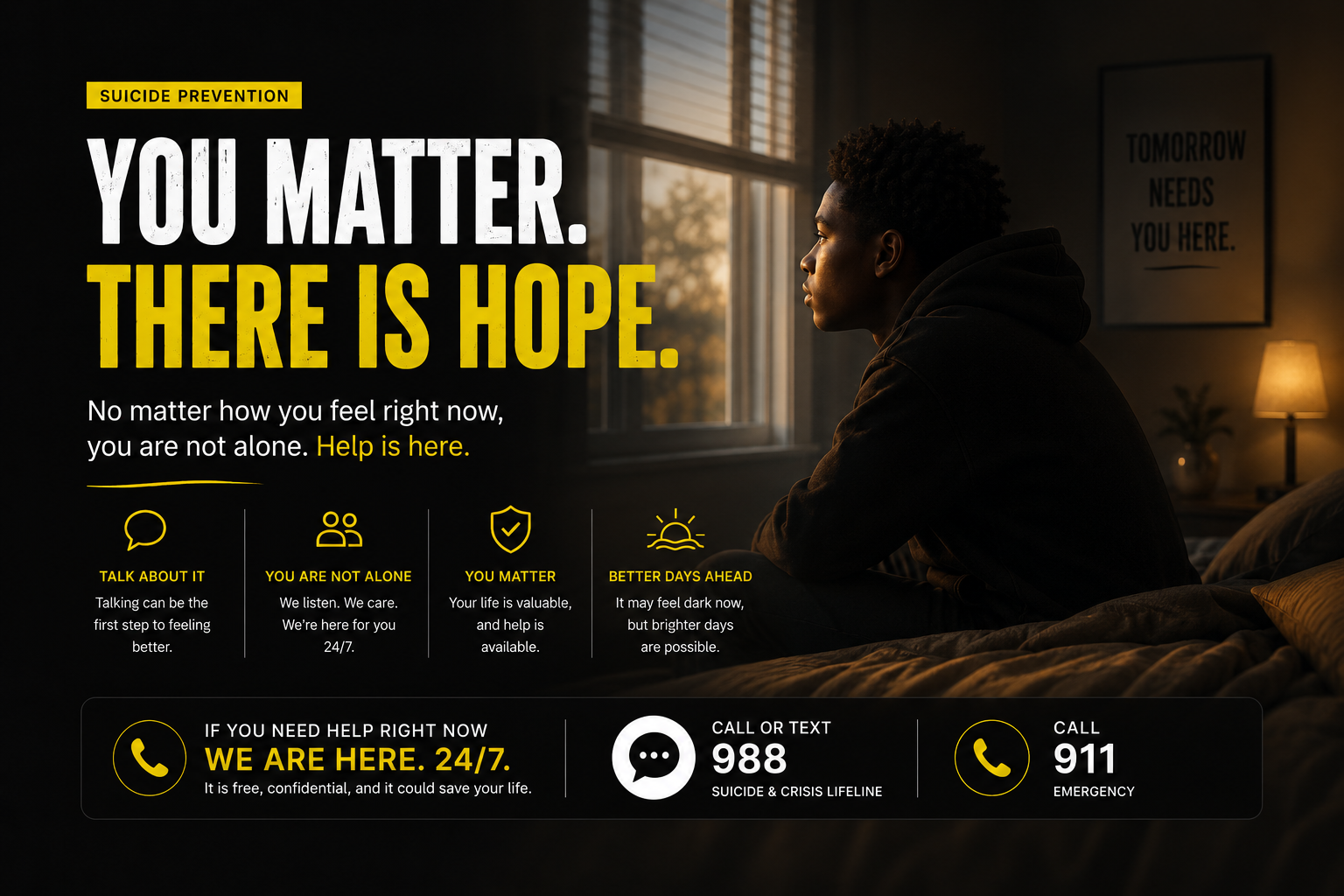
If You Need Help Right Now
You can talk to someone this minute. It is free, confidential, and open 24 hours.
Or text HOME to 741741 to reach the Crisis Text Line.
¿Necesitas ayuda en español? Llama o envía un mensaje de texto al 988.
Youth Suicide Prevention
Every Life Matters
Suicide is the second leading cause of death among young people aged 10-24. The good news: suicide is preventable.
Source: Centers for Disease Control and Prevention, Suicide Data and Statistics.
Risk Factors
Mental Health Conditions
Depression, anxiety, bipolar disorder significantly increase suicide risk.
Previous Suicide Attempts
Individuals with prior attempts are at significantly higher risk.
Trauma and Abuse
Physical, emotional, or sexual abuse can contribute to suicidal ideation.
Bullying and Isolation
Peer victimization and feelings of isolation are significant risk factors.
Substance Abuse
Drug and alcohol use can impair judgment and increase impulsive behavior.
Family History
A family history of suicide or mental health conditions increases vulnerability.
Warning Signs to Watch For
Talking About Suicide
Direct or indirect statements about wanting to die or not be around.
Mood Changes
Sudden shifts from sadness to calm may indicate a decision to attempt.
Withdrawal
Isolating from friends, family, and activities they once enjoyed.
Risky Behavior
Increased reckless or self-destructive actions without concern.
Giving Away Possessions
Distributing prized belongings to friends and family unexpectedly.
Hopelessness
Expressions of being a burden or feeling there's no future.
How to Help Someone in Crisis
Ask Directly
Don't be afraid to ask if they're thinking about suicide. Asking does not plant the idea.
Listen Without Judgment
Be there. Let them know you care and they're not alone.
Help Them Connect
Encourage them to reach out to a crisis line or mental health professional.
More Places to Turn
Call or Text
988 Suicide & Crisis Lifeline
98824/7 crisis support for anyone in emotional distress
Call NowCall
Childhelp National Child Abuse Hotline
1-800-4-A-CHILD24/7, for children and for adults worried about a child
Call NowImportant Disclaimer
This page is for informational purposes only and is not medical advice or a substitute for professional care. If you or someone you know is in immediate danger, call 911 or your local emergency number.