
Starting the Conversation
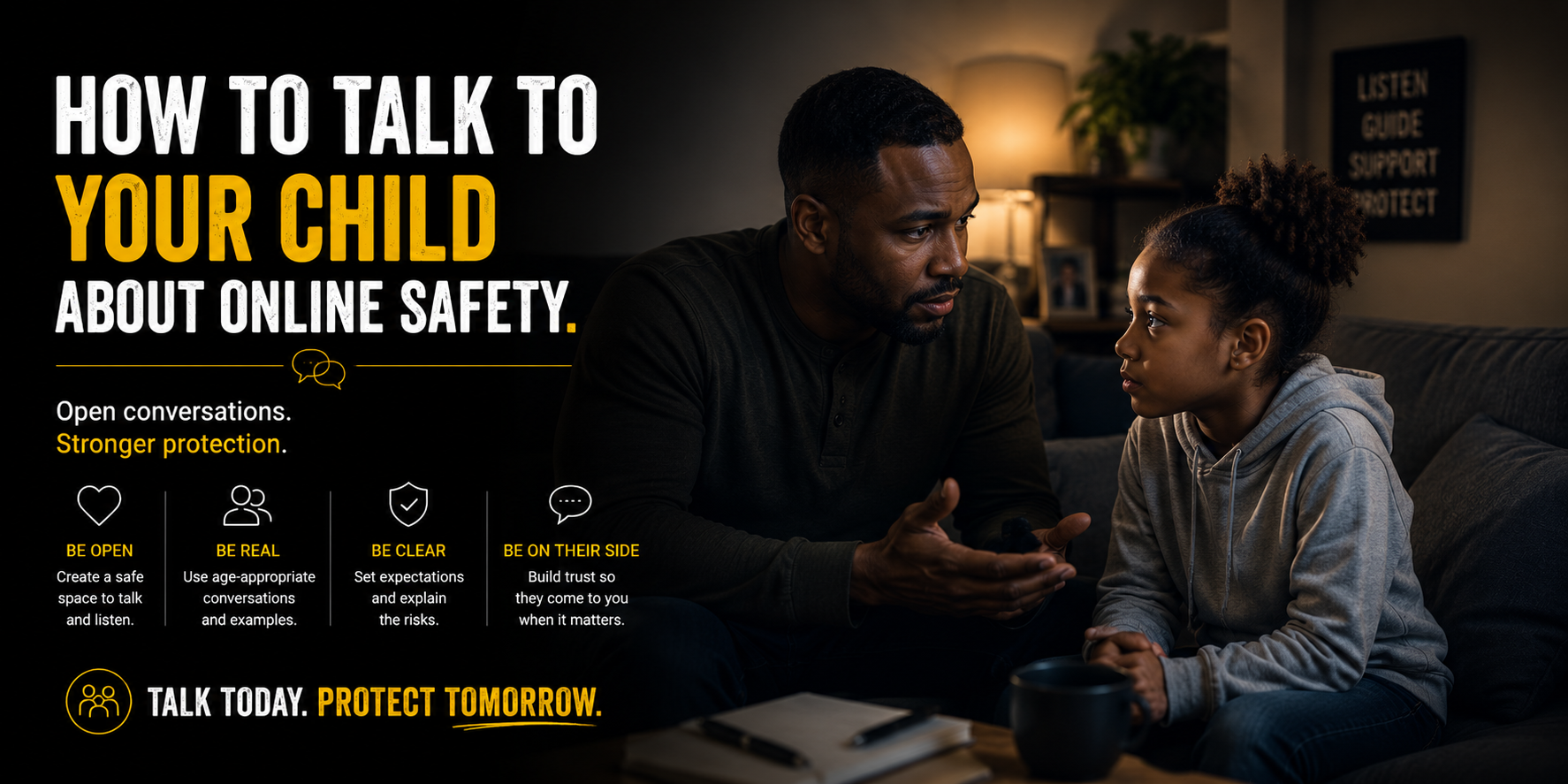
How to Talk to Your Child About Online Safety
Settings can be worked around. A child who tells you when something feels wrong cannot be. This page is about the conversation itself — when to have it, what to say, and how to answer so they come back the next time.
Before You Start
Four things that decide whether the conversation works, regardless of what you say.
Do It Sideways
In the car, on a walk, doing dishes. No eye contact and no sitting them down makes it a chat rather than an interrogation.
Short and Often
Five minutes many times beats one long talk. The goal is a topic that stays open, not a lecture they remember once.
Ask, Don't Warn
Questions keep them talking. Warnings end the conversation and teach them what not to mention next time.
Say the Promise Out Loud
"You will never be in trouble for telling me." Say it before anything happens, and mean it when something does.
What to Say, By Age
Same message, different words.
Ages 5–8
Keep it simple and about people, not the internet.
- “Who did you play with today? Do you know them from school?”
- “If someone in a game asks you something that feels funny, come tell me.”
- “Grown-ups should never ask a kid to keep a secret from their parents.”
Ages 9–12
They are being messaged now. Talk about tactics, not scares.
- “Has anyone ever asked you to move to a different app to talk?”
- “What would you do if someone you met online asked for a photo?”
- “People online can say they are any age. How would you even know?”
Ages 13+
Respect first. Treat them as someone with judgment you are helping sharpen.
- “Has anything online ever made you uncomfortable? You can just say yes.”
- “If someone threatened to share a photo of you, what would you want me to do?”
- “Anyone who threatens you is the one who broke the law, not you.”
When They Actually Tell You Something
This moment decides whether there is a next one. Your reaction matters more than your rules.
Thank them first
Before questions, before anything: "I'm glad you told me." It costs nothing and it keeps the door open.
Keep your face calm
Panic reads as anger to a child. Whatever you feel, hold it until later.
Do not take the phone as a reaction
If honesty costs them their phone, the next thing they will hide is the next problem.
Save it, then report it
Screenshots, usernames, and the app. Do not delete the account or the messages before reporting.
Things Not to Say
“Why would you do that?”
“I told you this would happen.”
“That's it, you're done with the internet.”
“Don't tell anyone about this.”
Important Disclaimer
This page is for informational purposes only. If you or someone you know is in immediate danger, call 911 or your local emergency number.