
Safe Adults
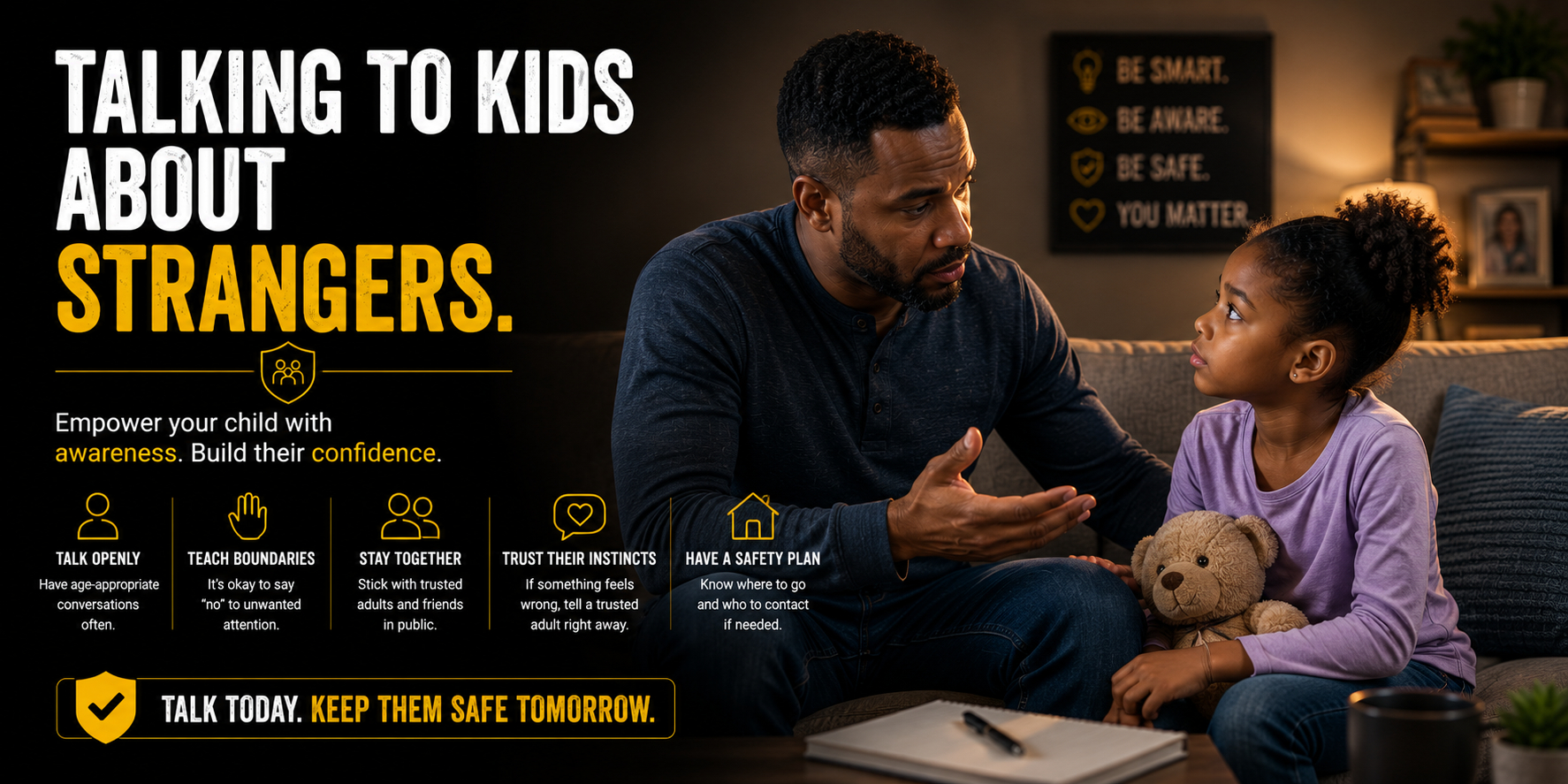
Talking to Kids About Strangers
Most children are harmed by someone they already know, not by a stranger. That single fact changes what we should be teaching. This page covers what works instead of "stranger danger", and how to practice it so a child can use it under pressure.
Why “Stranger Danger” Fails
It teaches the wrong lesson three times over.
It Aims at the Wrong Person
A child taught to fear strangers is defenceless against someone familiar — which is who is far more likely to cause harm.
Children Can't Spot One
To a child, a stranger looks scary. Anyone friendly who has spoken to them twice no longer counts as one.
It Backfires in a Crisis
A lost child who fears all strangers will hide from the very people who could get them home.
Teach This Instead
Four rules about behaviour, not appearance. They work whether the adult is a stranger or not.
Check first
Before going anywhere with anyone, accepting anything, or changing plans — ask a parent first. The rule applies to everyone, including family and family friends.
Adults ask adults for help
A grown-up who genuinely needs help does not ask a child. Someone asking a child to find a lost dog, carry something, or give directions is the warning sign itself.
No secrets from parents
Surprises are fine — a birthday present is a surprise. Anything an adult says to keep from a parent forever is a secret, and secrets get told immediately.
If you are lost, find a safe adult
Stay where you are and look for someone in uniform, someone working behind a counter, or a parent with children. Do not go looking, and do not leave with anyone offering to take you.
What a Tricky Person Does
Give your child the behaviours to watch for. These are the same whether the person is known to them or not.
Asks a child for help instead of an adult
Wants to be alone with them, away from others
Gives gifts, money or attention just to them
Asks them to keep something from their parents
Says the parent sent them, without the family's password
Keeps going after the child has said no
Practice It Out Loud
Knowing a rule and using it in the moment are different things. Children freeze. Practice removes the freeze.
Act it out as a game: you play the adult asking, they practice saying "I have to ask my mom first" and walking away. Give them permission to be rude — to run, to yell, to say no to a grown-up. Most children will not, because they have been taught politeness their whole lives.
A family password
Agree a word only your family knows. If anyone ever says a parent sent them, your child asks for the word. No word, they do not go — no matter who it is.
Important Disclaimer
This page is for informational purposes only. If you or someone you know is in immediate danger, call 911 or your local emergency number.