


Black Lives Matter Support — child safety resources, exploitation awareness, and youth suicide prevention
The Reality
The Crisis in Numbers
359,000+
Children reported missing each year in the U.S.
6,600+
Youth suicides annually in the United States
#2
Suicide is the 2nd leading cause of death for ages 10-24
Missing & Exploited Children
Protecting the Vulnerable
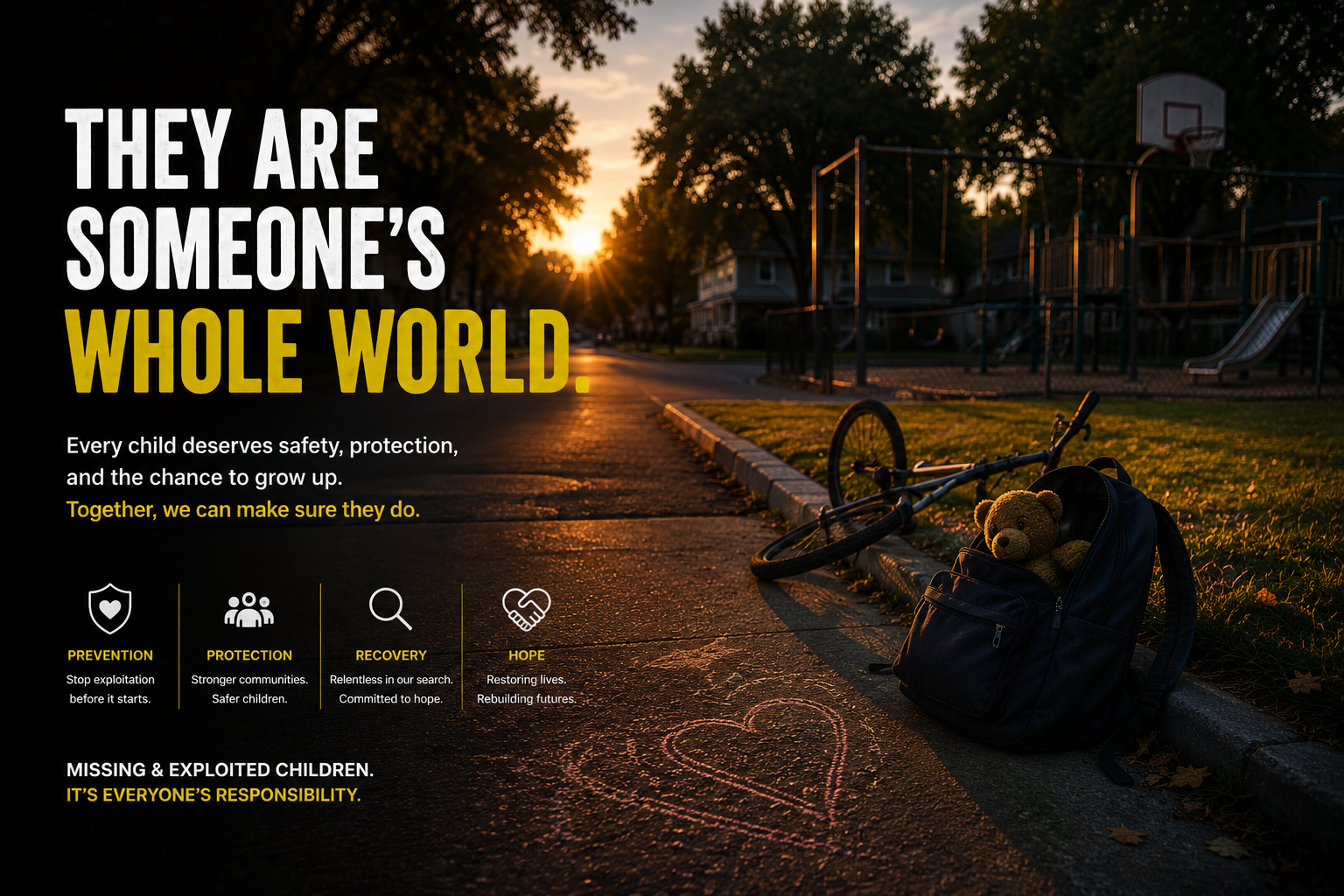
Child exploitation includes abduction, trafficking, sexual abuse, and online grooming. Every year, thousands of children are reported missing, and many fall victim to predators who use technology and deception to target vulnerable youth.
Forms of Exploitation
Child Trafficking
The recruitment, transportation, or harboring of children for exploitation.
Online Exploitation
Predators use social media, gaming platforms, and messaging apps to target children.
Child Abduction
Family and non-family abductions pose immediate threats to child safety.
Grooming
The process by which predators build trust with children and families to gain access.
CSAM
The production, distribution, and possession of abusive images of children.
Child Labor
Forced work that deprives children of their childhood, potential, and education.
Warning Signs
Changes in behavior or mood
Unexplained injuries or physical complaints
Withdrawal from friends and activities
Secretive about online activities
Decline in school performance
Expensive items without explanation
Youth Suicide Prevention
Every Life Matters
Suicide is the second leading cause of death among young people aged 10-24. The good news: suicide is preventable.
Risk Factors
Mental Health Conditions
Depression, anxiety, bipolar disorder significantly increase suicide risk.
Previous Suicide Attempts
Individuals with prior attempts are at significantly higher risk.
Trauma and Abuse
Physical, emotional, or sexual abuse can contribute to suicidal ideation.
Bullying and Isolation
Peer victimization and feelings of isolation are significant risk factors.
Substance Abuse
Drug and alcohol use can impair judgment and increase impulsive behavior.
Family History
A family history of suicide or mental health conditions increases vulnerability.
Warning Signs to Watch For
Talking About Suicide
Direct or indirect statements about wanting to die or not be around.
Mood Changes
Sudden shifts from sadness to calm may indicate a decision to attempt.
Withdrawal
Isolating from friends, family, and activities they once enjoyed.
Risky Behavior
Increased reckless or self-destructive actions without concern.
Giving Away Possessions
Distributing prized belongings to friends and family unexpectedly.
Hopelessness
Expressions of being a burden or feeling there's no future.
How to Help Someone in Crisis
Ask Directly
Don't be afraid to ask if they're thinking about suicide. Asking does not plant the idea.
Listen Without Judgment
Be there. Let them know you care and they're not alone.
Help Them Connect
Encourage them to reach out to a crisis line or mental health professional.
24/7 Resources
Immediate Help Is Available
If you or someone you know is in crisis, help is available 24/7. These resources are confidential and free.
Call or Text
988 Suicide & Crisis Lifeline
98824/7 crisis support for anyone in emotional distress
Call NowText
Crisis Text Line
HOME
to 741741
Free, confidential text-based counseling
Additional Resources
FBI Tip Line
tips.fbi.govReport online child exploitation
Important Disclaimer
This website is for informational purposes only. If you or someone you know is in immediate danger, call 911 or your local emergency number.